
 All Posts
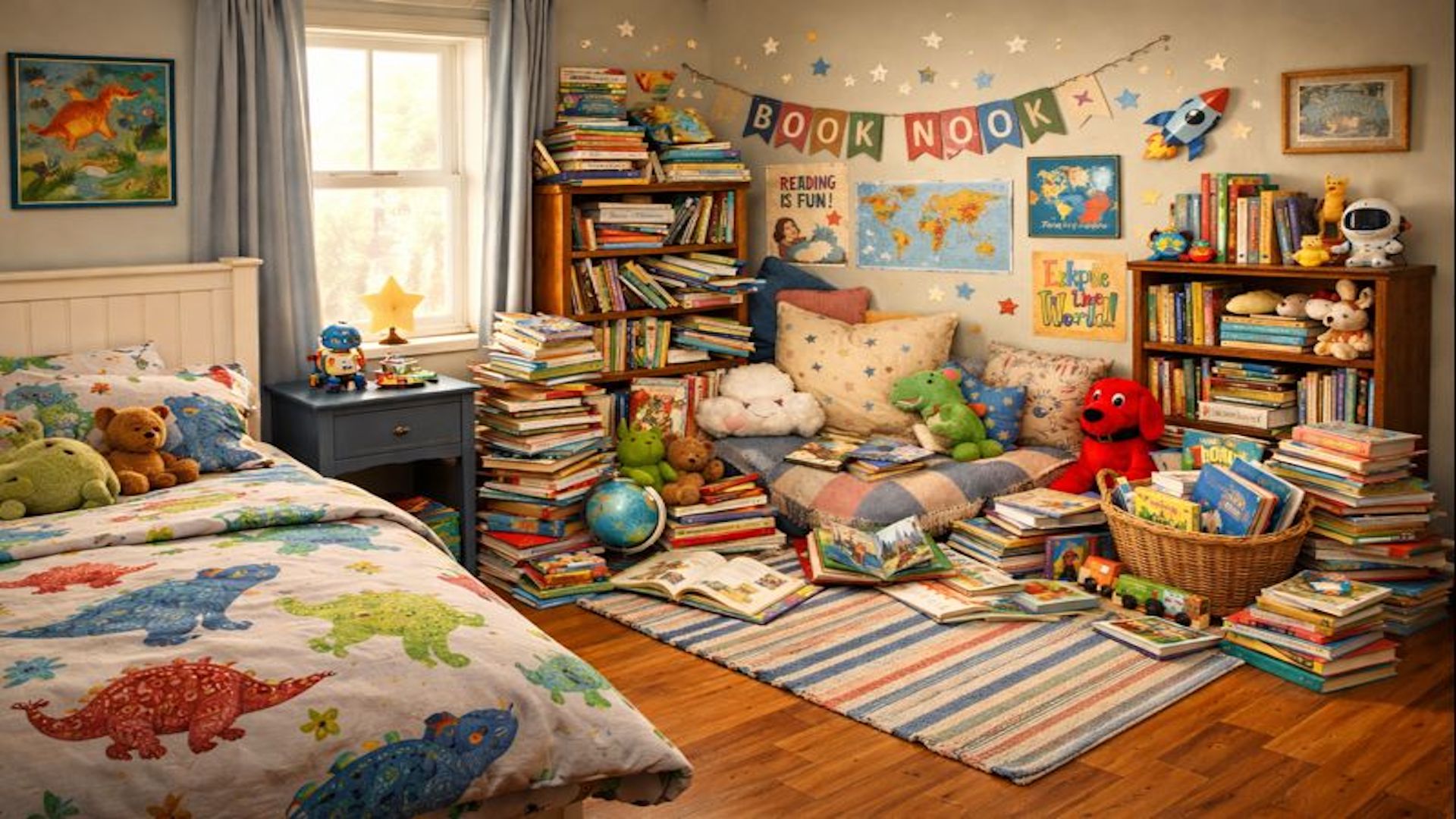
Books play a critical role in early literacy, language development, and academic success. Research shows that children who grow up in homes where books are accessible and reading is supported by caregivers develop stronger vocabulary, comprehension, and long-term reading habits¹². At the same time, too many books can feel overwhelming and make it harder for children to engage meaningfully with what they read.
Decluttering a child’s book collection does not have to mean removing learning opportunities. When done intentionally and together, it can strengthen literacy skills and deepen a child’s relationship with reading.
1. Sort Books Together by Purpose and Interest
Start by gathering books in one space and inviting your child to talk about each one. Ask questions like which books they love, which ones teach them something new, and which ones they no longer read. Sorting books into groups such as favorites, learning books, bedtime stories, and donate helps children think critically about texts and their own reading habits.
Shared discussion around books is a key part of a strong home literacy environment and is associated with better early language and reading outcomes¹.
2. Keep Books That Support Current and Emerging Skills
Work with your child to select books that match their current reading level while keeping a few that gently challenge them. This might include a mix of picture books, early readers, and narrative stories with richer vocabulary. Explaining why certain books are being kept helps children understand how reading supports learning.
Studies show that access to a well-curated home library is linked to higher academic achievement and more positive attitudes toward reading³.
3. Rotate Books Instead of Keeping All Books Out
Rather than displaying every book at once, choose a small selection to keep on accessible shelves and store the rest. Every few weeks, rotate books together and talk about why certain ones are coming back into the reading space. This keeps reading materials fresh and exciting while reducing visual clutter.
Classroom and library research shows that organized and limited book access supports independent reading and sustained engagement with texts⁴.
4. Create a Dedicated Reading Space Together
Choose a specific spot in the home for reading and organize books just for that space. Let your child help decide which books belong there and how they should be arranged. A cozy and intentional reading area encourages children to spend more time with books and see reading as an enjoyable daily activity.
Research on home literacy environments shows that clearly defined reading spaces increase both shared reading and child-initiated reading behaviors⁵.
5. Turn Decluttering Into a Literacy and Values Lesson
When it is time to let books go, involve your child in deciding where they will go. Talk about donating books to schools, libraries, or other families. This reinforces empathy and shows children that books are tools for learning that can benefit others.
Parental involvement in book selection, discussion, and reading routines has been consistently linked to stronger literacy development and motivation to read⁶.
References
¹ Johnson, A. D., Martin, A., Brooks-Gunn, J., & Petrill, S. A. (2008). Order in the house! Associations among household chaos, the home literacy environment, maternal reading ability, and children’s early reading. Merrill-Palmer Quarterly, 54(4), 445–472. https://doi.org/10.1353/mpq.0.0009
² Child Mind Institute. (n.d.). The importance of reading to children. https://childmind.org
³ Scholastic. (2019). Kids and family reading report. https://www.scholastic.com
⁴ Children’s Literacy Initiative. (n.d.). Building effective classroom and home literacy environments. https://www.childrensliteracyinitiative.org
⁵ Chen, Q. (2024). The importance of home literacy environments in shaping children’s reading attitudes. Journal of Education and Educational Research, 6(2), 45–53.
⁶ Sénéchal, M., & LeFevre, J. A. (2014). Continuity and change in the home literacy environment as predictors of growth in vocabulary and reading. Child Development, 85(4), 1552–1568. https://doi.org/10.1111/cdev.12222