
 All Posts
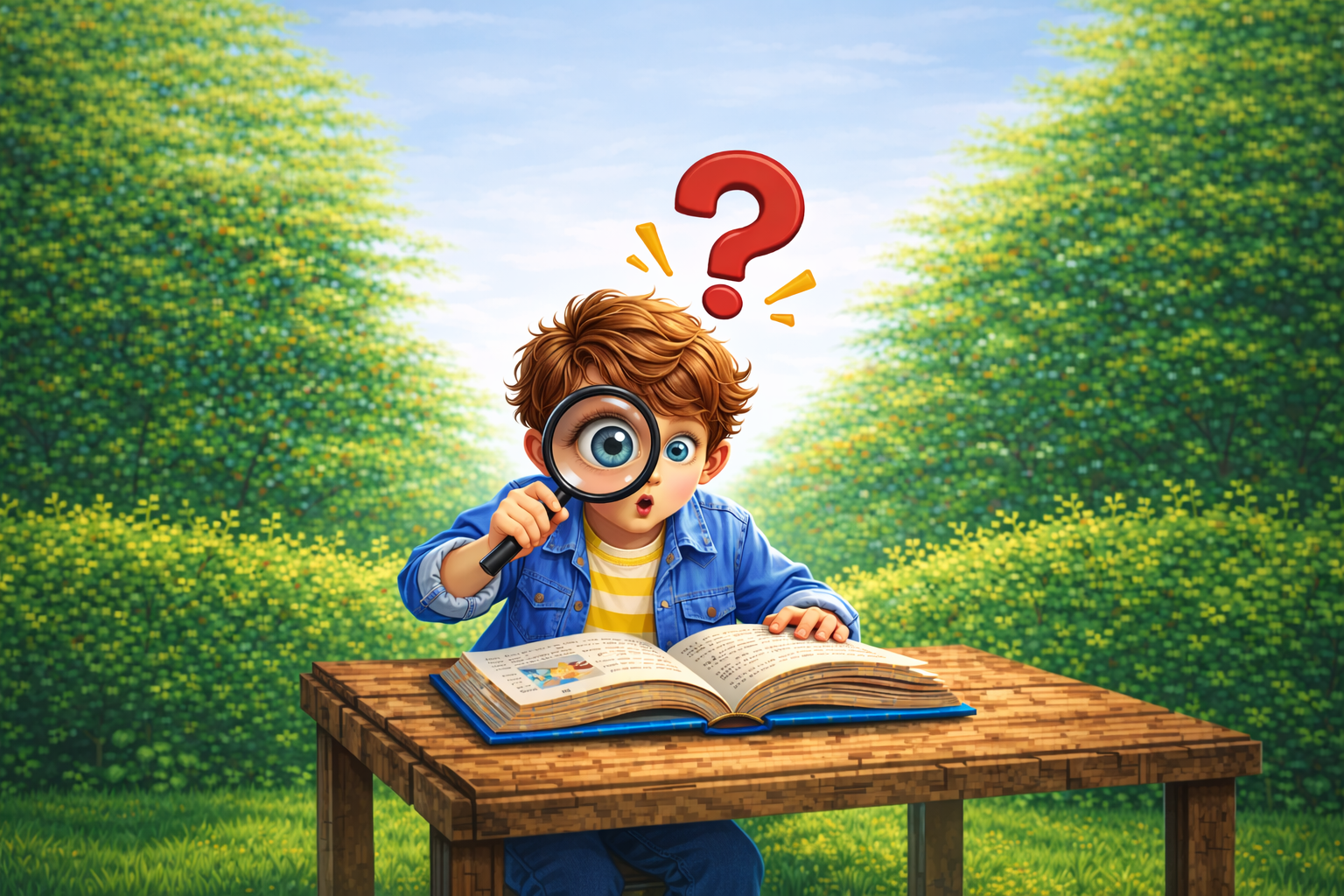
Children are born asking questions. Between the ages of two and five, they ask as many as 40,000 of them.
Why is the sky blue?
Who invented the telescope?
How did we get here?
Why do I have to go to school?
Who invented the telescope?
How did we get here?
Why do I have to go to school?
Curiosity is not something children need to be taught, it’s something we’re all born with. The problem is that, over time, it gets stymied. Especially once children enter the classroom.
Educator Neil Postman famously said that children go to school as question marks and leave as periods. Coincidentally (and tellingly), around age six, when formal schooling begins, the number of questions children ask starts to drop and curiosity dwindles.
This isn’t because children suddenly become less interested in the world. It’s because many of the environments they enter reward answers over questions, efficiency over exploration, and correctness over curiosity.
This isn’t because children suddenly become less interested in the world. It’s because many of the environments they enter reward answers over questions, efficiency over exploration, and correctness over curiosity.
By the time they’re adults, knowledge is understood to have a final resting place, in no need of revision. Therefore, they’ve just been getting the usual parts placed in their brain like a car in an assembly line.
So how do we maintain that fire of curiosity? Here are three tips to help keep your children asking questions:
1. You can’t make children curious, but you can create situations to foster it
You can’t force curiosity onto your children, but when something is unclear, turn that into an opportunity for them to formulate a question. Pause and let that confusion materialize, then invite them to solve the problem.
An environment that welcomes “Whys” and “Hows” teaches children that not knowing is the starting point of learning, not something to be ashamed of.
2. Try to answer the question
If you have the ability, try to sincerely answer the question. Children are trying to make sense of the world, and they trust your explanation more than anyone else’s. Brushing off questions or responding with vague or dismissive answers demonstrates that curiosity isn’t worth pursuing. So do the best you can to introduce new information into their life.
3. Encourage them to find their own answers
Especially when you feel like you can’t answer their questions, encourage children to look for the answers themselves. Ask them, “How do you think we could find out?”
They won't just find the answer, but will appreciate the process of learning and inquiry.
Kindle the fire of curiosity
2. Try to answer the question
If you have the ability, try to sincerely answer the question. Children are trying to make sense of the world, and they trust your explanation more than anyone else’s. Brushing off questions or responding with vague or dismissive answers demonstrates that curiosity isn’t worth pursuing. So do the best you can to introduce new information into their life.
3. Encourage them to find their own answers
Especially when you feel like you can’t answer their questions, encourage children to look for the answers themselves. Ask them, “How do you think we could find out?”
They won't just find the answer, but will appreciate the process of learning and inquiry.
Kindle the fire of curiosity
We’ve all been there. We tell ourselves we just don’t have the time or the patience to answer these deep and thought-provoking questions. However, putting the effort allows parents and teachers to play a part in kindling that fire of curiosity into their children for the rest of their life.
References
References
- Berger, W. (2014). A more beautiful question: The power of inquiry to spark breakthrough ideas. Bloomsbury USA.
- Boudreau, E. (2020, November 24). A curious mind: How educators and parents can encourage and guide children’s natural curiosity - in the classroom and at home. Harvard Graduate School of Education. https://www.gse.harvard.edu/ideas/usable-knowledge/20/11/curious-mind
- Postman, N. (1996). The end of education: Redefining the value of school. Vintage.
- Schwartz, K. (2016, February 9). How to bring more ‘beautiful questions’ back to school. KQED. https://www.kqed.org/mindshift/43596/how-to-bring-more-beautiful-questions-back-to-school
- Shiels, P. (2021, July 5). How to embrace your curious kid’s constant questioning. Nurturedfirst. https://nurturedfirst.com/toddler/embrace-curiosity-questions/